Research
Full bibliography on Google Scholar and in my CV.
A vascular code for speed
PhD, 2021–2025. PSL University, at Physics for Medicine Paris, supervised by Sophie Pezet and Mickaël Tanter. CIFRE with Iconeus.
Place cells, grid cells, head direction cells and speed cells taught us how single neurons encode space. The question of my PhD was whether the same information shows up at the mesoscopic scale, in the blood flow that feeds those neurons, and so becomes visible to whole-brain imaging.
To find out, I imaged freely moving rats with functional ultrasound imaging (fUSI) while they explored an arena, and tracked their behavior with pose estimation. Blood volume in hippocampal and parahippocampal regions follows the animal’s running speed closely enough that speed can be decoded across animals from regional fUSI signals alone. Angular head speed leaves a weaker but visible trace in thalamic nuclei.
Getting there meant solving some practical problems first: reproducible imaging planes across sessions, probe placement, behavioral videos synchronized with the scanner, and the analysis pipeline itself.
- Cybis Pereira, F., et al. (2026). A vascular code for speed in the spatial navigation system. Cell Reports, 45(1). doi:10.1016/j.celrep.2025.116791
- Cybis Pereira, F. (2025). Revealing vascular patterns of the spatial navigation system using functional ultrasound imaging. PhD thesis, PSL University. doi:10.70675/3815cfb5z4f06z42fezaf29z155a835e38b8 PariSanté Campus PhD Award 2025 (Innovation & Industry).
Research collaborations
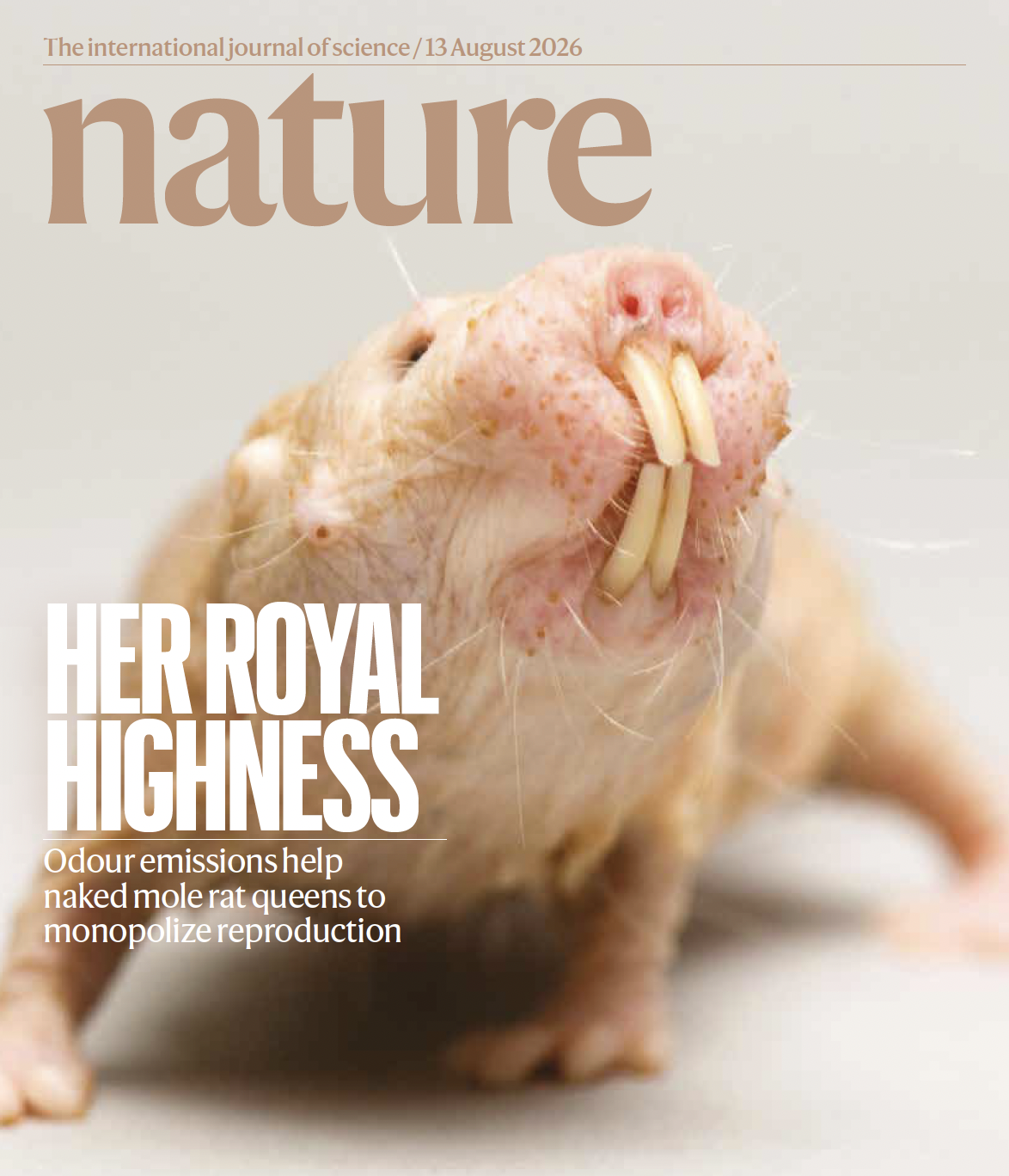
A queen odour mediates reproductive suppression in a eusocial mammal
Khallaf, M.A., …, Cybis Pereira, F., …, et al. (2026). Nature, 656. doi:10.1038/s41586-026-10772-5
A single queen breeds in a naked mole-rat colony, and a chemical in her scent helps keep it that way.
I analyzed the fUSI data: I registered naked mole-rat brains to the mouse atlas, mapped the brain’s response to the queen odor and ran the statistics.
Cool media: ESPCI news · Nature short
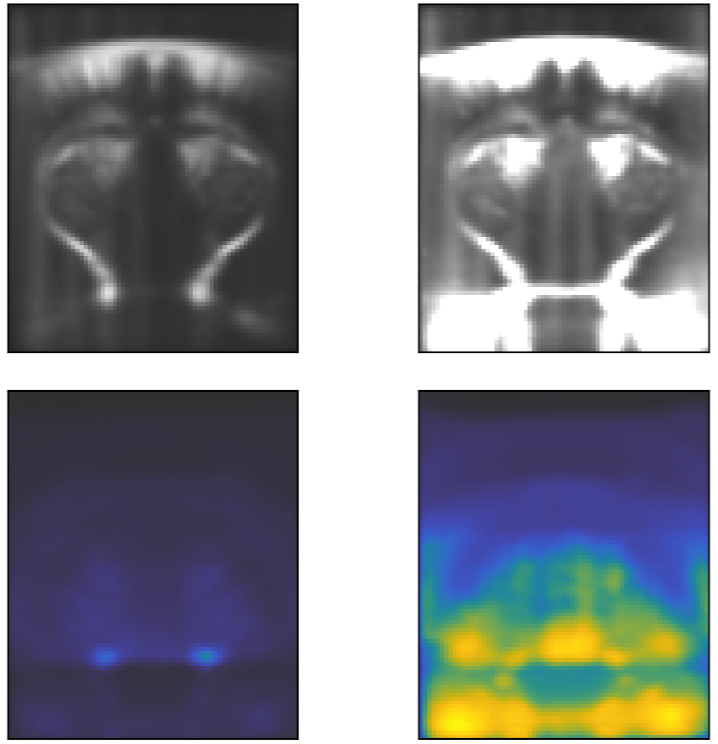
Robust functional ultrasound imaging in the awake and behaving brain: a systematic framework for motion artifact removal
Le Meur-Diebolt, S., Cybis Pereira, F., et al. (2026). Imaging Neuroscience, 4. doi:10.1162/IMAG.a.1191
This paper benchmarks 792 fUSI denoising strategies across four datasets and recommends two pipelines.
I co-developed the core fUSI analysis software used to build the benchmark framework.
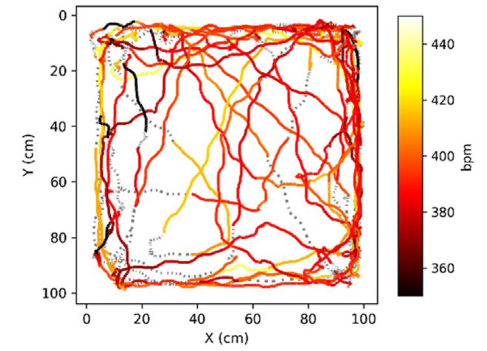
Physio-fUS: a tissue-motion based method for heart and breathing rate assessment in neurofunctional ultrasound imaging
Zucker, N., Le Meur-Diebolt, S., Cybis Pereira, F., et al. (2025). eBioMedicine, 112. doi:10.1016/j.ebiom.2025.105581
The tissue motion of Doppler recordings is enough to recover heart and breathing rate.
I ran the fUSI recordings on freely moving rats and helped with the related subfigures.